Guides

Deep dives and real debugging walkthroughs — DNS, email authentication, and TLS problems explained the way they actually break.
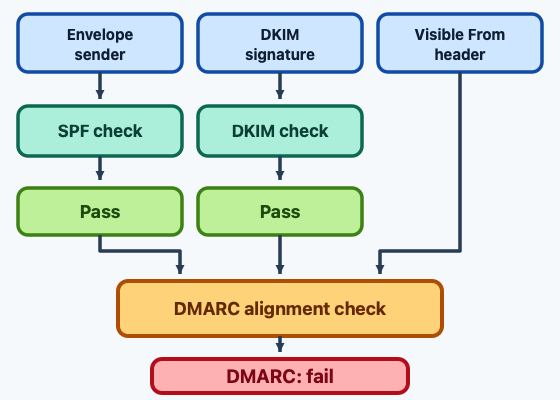
Why Is My Email Landing in Spam? A Real SPF, DKIM, and DMARC Debugging Walkthrough
A step-by-step investigation into why legitimate mail gets rejected — reading Authentication-Results headers, DMARC alignment, and the fixes in the order that actually works.

Email Security SPF DKIM DMARC

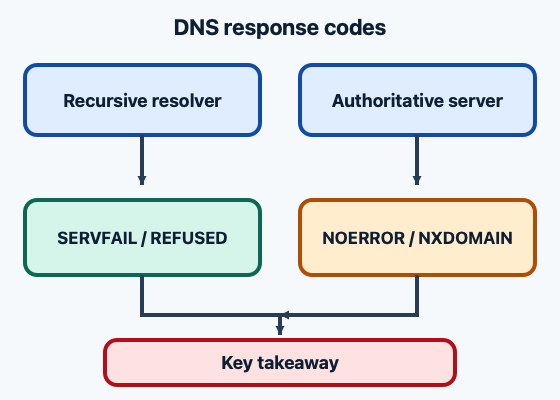
NXDOMAIN, SERVFAIL, REFUSED: What Your DNS Error Actually Means
Three DNS error codes get treated as one generic failure. Each one actually tells you who broke and where — read correctly, it narrows the problem before you touch a config file.

DNS Troubleshooting

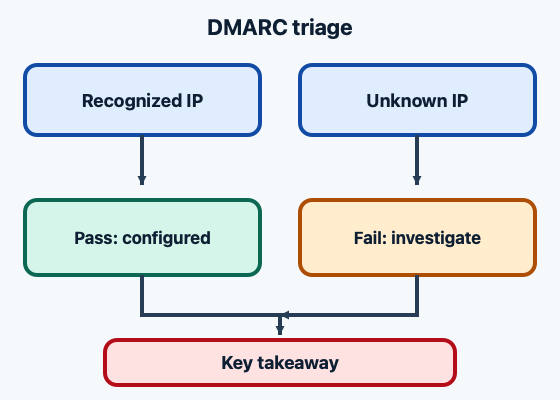
How to Read a DMARC Report Without Losing Your Mind
Gzipped XML nobody opens, from providers you've never heard of. Here's what's actually inside a DMARC aggregate report and how to get a real answer in about ten minutes.

Email Security DMARC

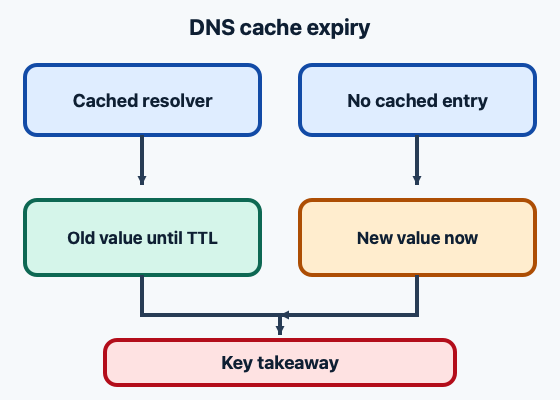
DNS Propagation Doesn't Exist (And What's Actually Happening Instead)
The 24-48 hour rule is folklore. What's really happening is caches expiring on independent timers — once you see that, the timing becomes predictable and controllable.

DNS Caching TTL

Your Certificate Renewed, So Why Is the Browser Still Angry?
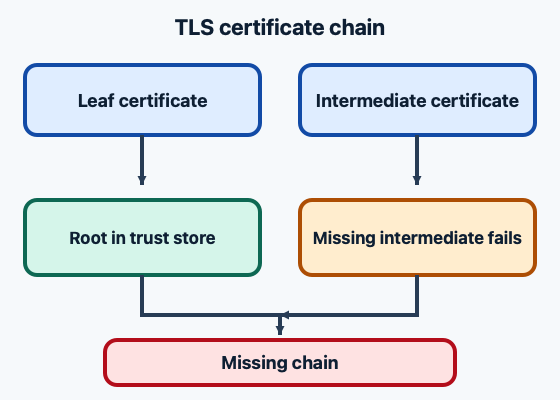
The file on disk is correct. The problem lives in the gap between the certificate you installed and what a client actually receives and validates.

SSL/TLS Certificates

How Domain Spoofing Actually Works, and What DMARC Can't Stop
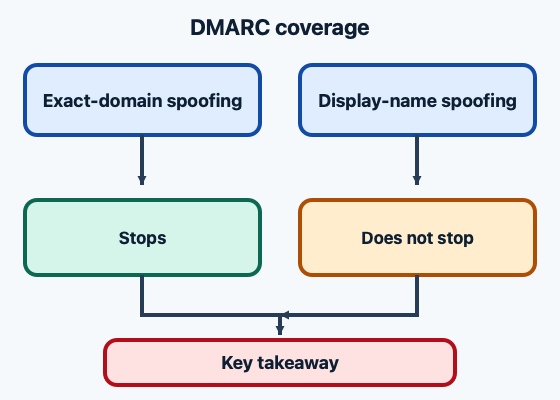
SPF, DKIM, and DMARC at p=reject, and the phishing emails keep arriving anyway. Here's the gap between what your defenses cover and what they were never designed to touch.

Email Security Spoofing DMARC

Why Your Site Works on Desktop and Fails on Mobile
'DNS' isn't one thing. Your laptop, your phone, and your customer abroad are asking different resolvers, with different caches and sometimes genuinely different answers.

DNS Resolvers

CNAME, A, and ALIAS: Why You Can't CNAME Your Root Domain

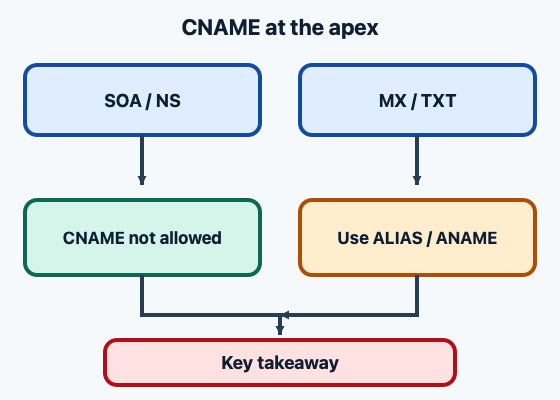
A 1987 rule still governs why your CDN's 'just add a CNAME' instructions break on your root domain — and why ALIAS records exist at all.

DNS Records